
The Luxury of Outdoor Adventure, Climbing, and the Right to Reach the Summit
After summiting Mount Katahdin with her son, Ascend founder and executive director Marina LeGree reflects on Joy, Freedom, and the Right to Climb

Two days before my son’s 11th birthday, we stood side by side atop Mount Katahdin, taking in the sweeping view of Maine’s endless forests. The sun danced in and out of the clouds and ravens circled below us. Standing next to the summit marker, my son beamed with pride. It was a perfect day.
On the way back down, we passed two young girls hiking up with their parents. My mind drifted to the many hikes I’ve been on in drier, rockier, higher places. Places where mothers would never dream of taking their children on outdoor adventures, places where girls are not allowed to be outside.
The Freedom We Take for Granted
Charlie and I didn’t have to ask anyone’s permission to go to Katahdin. We dressed for comfort, not modesty. We didn’t give a second thought to who was watching, or wonder if an authority figure would turn us back simply because of gender or who we were walking with.

A mother in Afghanistan has no such freedom. A simple day outdoors with her children is virtually impossible. A relentless barrage of restrictions erases her from public life. Parks, gardens, playgrounds are off-limits. And, if her children are girls, she knows there is no chance for them to taste the joys of exercise, sport, or exploration.
A Global Challenge for Girls & Women
While the situation in Afghanistan represents an extreme level of institutional oppression, the reality is that barriers preventing women and girls from accessing the outdoors safely exist everywhere. Cultural and practical obstacles stand in the way of girls getting outside, including right here in the United States, and all over the world.
Safety and Fear: In many places, women and girls cannot hike, run, or explore open spaces without risking harassment or physical violence.
Cultural Expectations: Social norms often dictate that outdoor adventure is reserved for boys, while girls are conditioned to stay indoors, stay safe, and assume caretaking duties early in life.
Lack of Resources: Access to gear, transportation, and leadership training is unevenly distributed, keeping girls and women away from natural spaces.
Watching my child push his limits and feel powerful in his own body was deeply satisfying. That kind of focused physical activity is what shaped me as I grew up in the mountains of Washington state, as a country kid and an athlete. And during the years I spent living in northeast Afghanistan, making that kind of freedom possible for the Afghan girls who were my friends and neighbors is the dream that took root, eventually becoming Ascend.
Why We Climb
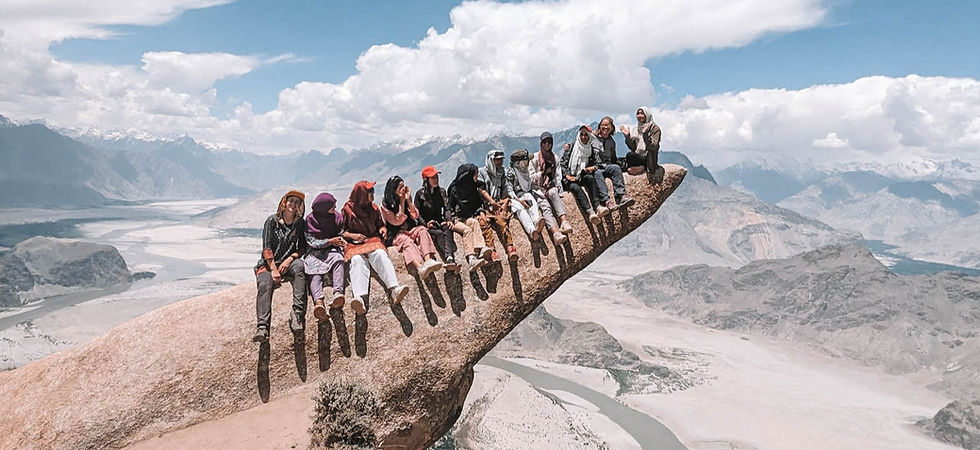
I started Ascend as a way to connect girls in Afghanistan with the outdoor experiences that had been so formative in my life. I believe that qualities of leadership, courage, and self-worth are developed and honed outdoors, on the trail and on the rock. When young women are given the tools to navigate rough terrain, summit peaks, and support one another, they carry that strength into every aspect of their lives.
Standing on Katahdin with my son reminded me of what we are working for every single day. We aren't just fighting for the right to hike—we are fighting for freedom of movement, bodily autonomy, and the right to belong in the world.
Every girl, everywhere, deserves to stand on a summit, look out at the horizon, and know that she belongs there. Until that is a reality for women and girls across the globe, our work continues.


I love how you found a supportive climbing crew as a ‘third place’ after growing up in the Bible Belt. It’s great that you have a spot to breathe. Speaking of new beginnings, even your meals can get a fresh label with Nutrition Label Maker!